Across the UK, welding remains one of the most valuable hands-on skills in construction, manufacturing, engineering and repair work. From structural steel and fabrication to transport, energy and maintenance, businesses continue to rely on skilled welders to keep projects moving. At the same time, many employers are finding it difficult to recruit people with the right practical ability, qualifications and workshop confidence. The UK government’s temporary shortage list includes welding trades, and official careers guidance shows welding as a recognised route with strong earning potential and progression.
That matters for two different groups of people.
First, it matters for anyone looking for a new career, a trade skill, or a better route into employment. Welding can open doors into construction, fabrication, site work, manufacturing, automotive repair and specialist coded work. Official careers information says welders in the UK can earn around £25,000 as a starter and up to £45,000 when experienced, depending on skill level, sector and location.
Second, it matters for people who do not necessarily want a full-time welding career, but want to learn welding for their own practical projects. That could mean restoring a car, repairing gates and railings, building frames, improving workshop capability, or simply gaining the confidence to work with metal safely and properly. Learning welding is not only about jobs. For many people, it is a useful life skill that helps turn ideas into finished projects.
Why Is There a Shortage of Welders?
The shortage is not down to one single cause. In many sectors, experienced tradespeople have retired or moved on, while demand for practical technical skills has stayed strong. At the same time, large-scale work in infrastructure, engineering, manufacturing and energy keeps creating a need for people who can weld accurately, safely and to a good standard. The government has also said its clean energy plans will require hundreds of thousands of additional jobs by 2030, with welders specifically named among the occupations expected to be in high demand.
For employers, that creates a real skills gap. For learners, it creates opportunity.
When a skill is in demand, training becomes more valuable. Employers are not only looking for people who say they are interested in welding. They are looking for people who understand process, preparation, safety, materials and consistency. That is why proper hands-on training matters.
Welding Job Opportunities in the UK
A welding background can lead into a wide range of roles. Depending on your training and experience, opportunities may include:
- MIG welder
- TIG welder
- MMA welder
- Fabricator welder
- Pipe welder
- Production welder
- Site welder
- Maintenance and repair welder
- Coded welder for specialist or higher-standard work
The National Careers Service lists common alternative titles including pipe welder, MIG welder, TIG welder, arc welder and boilermaker, showing just how broad the trade can be.
This variety is one reason welding appeals to so many learners. Some people want to enter the trade from scratch. Some already work in construction or engineering and want to add welding to their skill set. Others want to improve their prospects by moving from basic workshop knowledge into more advanced or certified work.
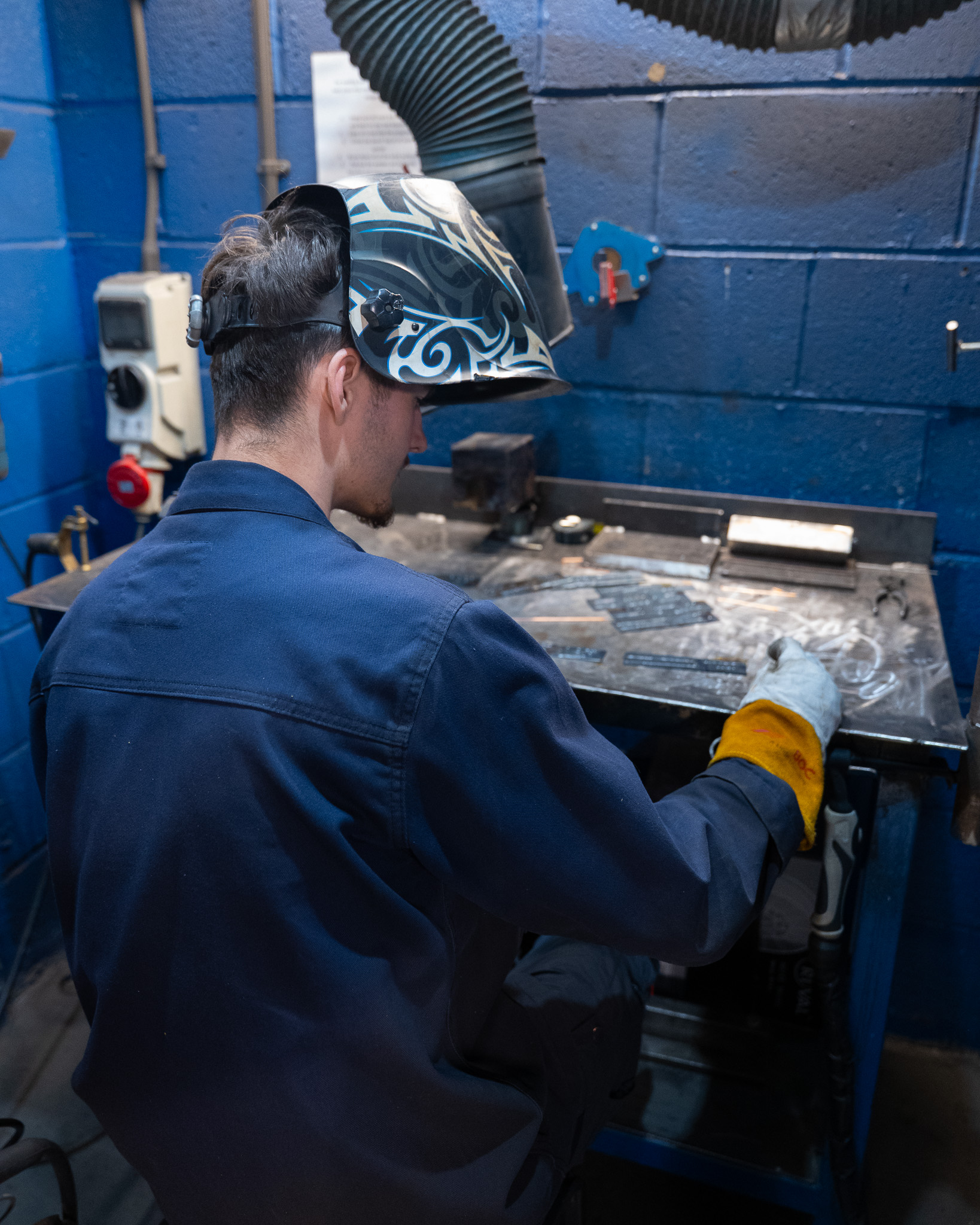
Learning Welding for Your Own Projects
Not everyone taking a welding course is planning a full career change, and that is perfectly fine.
Many learners come to welding because they want to build or repair something themselves. They may be working on:
- classic cars or motorcycles
- trailers
- metal gates and fencing
- workshop benches and frames
- home or garden fabrication projects
- agricultural or maintenance repairs
The key advantage of learning in a proper training environment is that you build good habits from the start. You learn how to handle equipment safely, prepare joints correctly, understand the basics of different welding methods and improve the quality of your finished work. That can save a great deal of time, frustration and wasted material later on.
For hobbyists and project-based learners, welding is a practical skill that offers independence. Instead of relying on outside help for every repair or fabrication task, you gain the confidence to tackle suitable jobs yourself.
Choosing the Right Welding Course
The right course depends on your goal.
If you are brand new to welding, a beginner-friendly route makes sense. If you already have some workshop experience, you may be ready for a more focused qualification. If your goal is employment or progression, recognised training can help you demonstrate ability more clearly.
CBWA’s welding page already reflects those different entry points. It highlights basic training in MIG, TIG and MMA, a Classic Car and Bike Welding Course, Level 1 and Level 2 awards, a Level 2 Certificate in Welding Skills, evening welding options, and coded welding training and testing. That means learners can choose a route based on whether they want to get started, improve existing skills, support a personal project or move towards industry-standard assessment.
Why Practical Training Makes the Difference
Watching videos online can be useful for background understanding, but welding is a skill that improves through guided practice. Real progress comes from spending time with the equipment, understanding setup, correcting mistakes and developing control.
That is especially important if your goal is employment. Employers value people who can work safely, follow process and produce sound welds consistently. It is also important for hobbyists, because poor technique can lead to weak joins, wasted material and unsafe outcomes.
A structured course gives learners a stronger foundation, whether they want to progress into work or simply complete their own projects to a much higher standard.
Start Building a Skill That Is Always Useful
Welding is one of those skills that stays relevant. It supports major industries, creates routes into work and gives individuals the ability to build, repair and fabricate with confidence. With welding trades on the UK’s temporary shortage list, official salary guidance showing solid earning potential, and wider industrial and energy investment expected to increase demand for skilled trades, there is a strong case for learning now.
Whether you want to pursue welding as a career, improve your employability, or learn for your own fabrication and restoration projects, the right training can help you take that next step.
https://www.cbwa.co.uk/programs/welding
https://www.cbwa.co.uk/programs/welding

Check out our socials below!
Related Posts