Course Category

Fire Detection Installation Course

Develop specialist practical skills in fire alarm containment, fire-resistant cabling, terminations, inspection and testing to a safe and professional standard.

fire detection

This course is ideal for

  • Qualified or practicing electricians
  • Electrical installers
  • Fire alarm installers
  • Fire detection and alarm engineers
  • Electrical maintenance engineers
  • Facilities maintenance personnel
  • Security and life-safety system installers
  • Experienced electrical workers moving into the fire alarm sector
  • People wishing to strengthen practical containment and cabling skills

Course Overview

The Fire Detection Installation Course is a comprehensive practical programme for electricians, electrical installers, fire alarm engineers, maintenance engineers and other suitably experienced tradespeople who
want to develop specialist fire alarm installation skills.

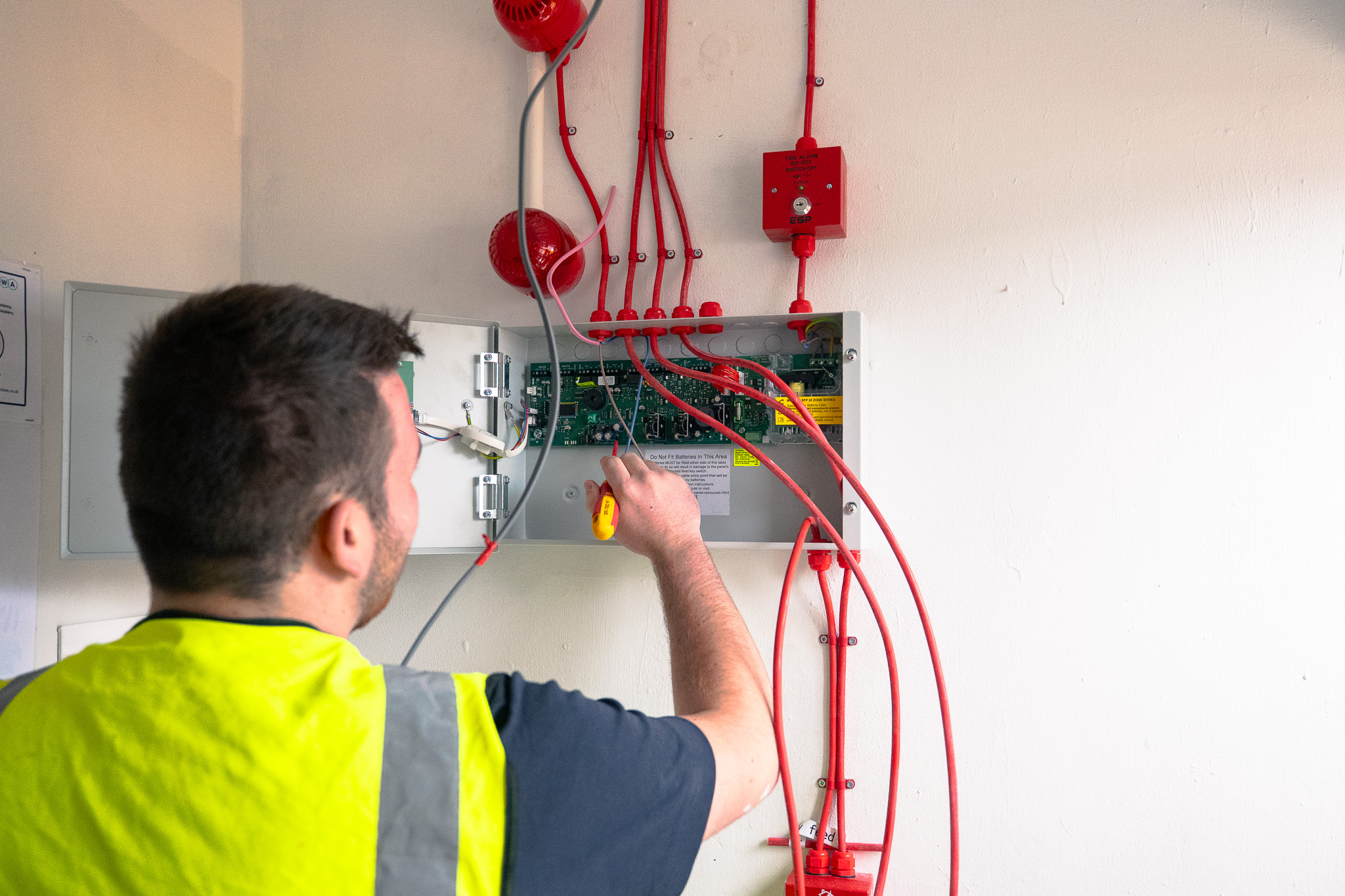
The course focuses on completing fire alarm wiring systems safely, accurately and professionally. Learners work with common containment systems, FP200-type fire-resistant cable and MICC cable while
developing inspection, continuity-testing, insulation-resistance-testing and documentation skills.

Training combines classroom learning, tutor demonstrations and extensive workshop practice at CBWA’s purpose-built electrical training Centre in Coventry. CBWA intends the course to be independently
endorsed, with the endorsing organisation to be confirmed before publication.

Show More

Course Content

Schedule & Duration:

  • This course is delivered at CBWA’s Coventry training centre. Available delivery options may include:
  • Daytime weekday training
  • Scheduled block delivery
  • Bespoke training for employers and groups

Please contact CBWA for the next available course dates and the confirmed timetable.

Equipment & Facilities

Training takes place at CBWA’s purpose-built construction and electrical training Centre. The Learners will have access to:

You will have access to:

  • Specialist electrical and fire alarm installation equipment
  • Practical containment, cabling, termination and testing workstations
  • Classroom and computer-based learning facilities
  • Industry-experienced tutors
  • Kitchen facilities
  • Free tea and coffee
  • Free on-site parking

We are located at: Unit 1, Crondal Road Bayton Road Industrial Estate Exhall, Coventry CV7 9NH
Course Description

Learners develop practical ability in planning and installing basic fire detection and alarm circuits in commercial, industrial and other non-domestic premises. Relevant principles from BS 5839-1 and BS
7671 are introduced to explain how standards influence cable selection, containment, circuit installation, testing, workmanship and documentation.

A major part of the programme is dedicated to high-quality containment and cable installation. Learners measure, mark out, cut, form, join and secure cable tray, conduit and trunking before installing and
terminating fire-resistant cables.

The course goes beyond producing an installation that simply operates. Learners are expected to complete work that is safe, correctly supported, appropriately tested, accessible, maintainable and
visually professional.

Show More

Entry Requirements

Applicants should have a suitable level of electrical knowledge or relevant practical experience. The course is intended to develop specialist fire alarm installation skills and is not a replacement for a
complete electrical apprenticeship or broader electrical qualification.

Learners must be able to use hand tools safely, follow technical instructions and complete practical workshop tasks. CBWA may carry out an initial discussion or skills review before confirming a place.

Show More

Books and Equipment Required

  • Suitable workwear and safety footwear
  • Any PPE specified by CBWA for practical sessions
  • Suitable stationery and note-taking materials
  • A non-programmable scientific calculator where requested
  • Relevant standards or guidance confirmed in the joining instructions

CBWA will confirm the exact PPE, books and equipment required before the course begins.

Show More

Assessment

Learners complete a combination of theoretical and practical activities to demonstrate their understanding and ability. Assessment is course-based and may include knowledge questions,
observation, inspection of completed installations, testing exercises and relevant documentation.

  • Practical work is assessed against areas such as:
  • Safe working practices
  • Correct use of tools and equipment
  • Interpretation of installation information
  • Selection of suitable materials
  • Accuracy of measurement and preparation
  • Installation of containment systems
  • Installation and termination of fire alarm cables
  • Cable support and mechanical protection
  • Continuity and insulation-resistance testing
  • Accurate recording of results
  • Neatness and quality of workmanship
  • Compliance with the specified installation requirements

Learners receive guidance throughout the programme and have opportunities to improve their techniques as they progress.

Show More

Skills Gained

By the end of the course, learners should be better able to:

  • Plan a basic fire alarm wiring installation
  • Interpret relevant installation information
  • Select suitable cables, containment and accessories
  • Install cable tray, PVC conduit, steel conduit, PVC trunking and steel trunking
  • Work with FP200-type fire-resistant cable and MICC cable
  • Support and protect fire alarm cabling correctly
  • Prepare and complete professional cable terminations
  • Carry out continuity testing
  • Carry out insulation-resistance testing
  • Identify basic installation faults
  • Record test results and installation information
  • Apply relevant principles from BS 5839-1 and BS 7671
  • Produce safe, neat and professional installation work

Show More

What Do We Offer?

Independently endorsed course
CBWA intends the programme to carry independent endorsement. The endorsing organisation and final certification wording will be inserted once formally confirmed.

Extensive practical workshop training
Tutor demonstrations are followed by supervised exercises covering containment, fire-resistant cabling, terminations, inspection and testing.

Industry-experienced tutors

Training is delivered by tutors with practical electrical and fire detection industry experience.

Real installation materials

Learners work with cable tray, conduit, trunking, FP200-type cable, MICC cable, fixings and accessories.

Focused learner feedback
Learners receive constructive feedback on safety, accuracy, technique, workmanship and presentation throughout the course.

Professional installation standards
The programme reinforces neat, accessible, maintainable and correctly documented installation work.

Show More

Progression Opportunities

After completing this course, learners may progress into fire detection installation work or undertake further training in:
  • Fire alarm system design
  • Commissioning and handover
  • Inspection, testing and verification
  • Servicing and maintenance
  • Fire alarm fault-finding
  • Emergency lighting systems
  • BS 5839-1 requirements
  • BS 5266 emergency lighting requirements
  • Electrical inspection and testing
  • Specialist fire safety qualifications

The course provides a strong practical foundation but does not, by itself, prove competence for every fire alarm role or replace any qualification, experience or certification required by an employer, certification body or scheme.

Show More
£700.00

Fire Detection Installation Course

  • Duration5 Days
  • Skill LevelAdvanced

Fire Detection Installation Course
£700.00