Course Category

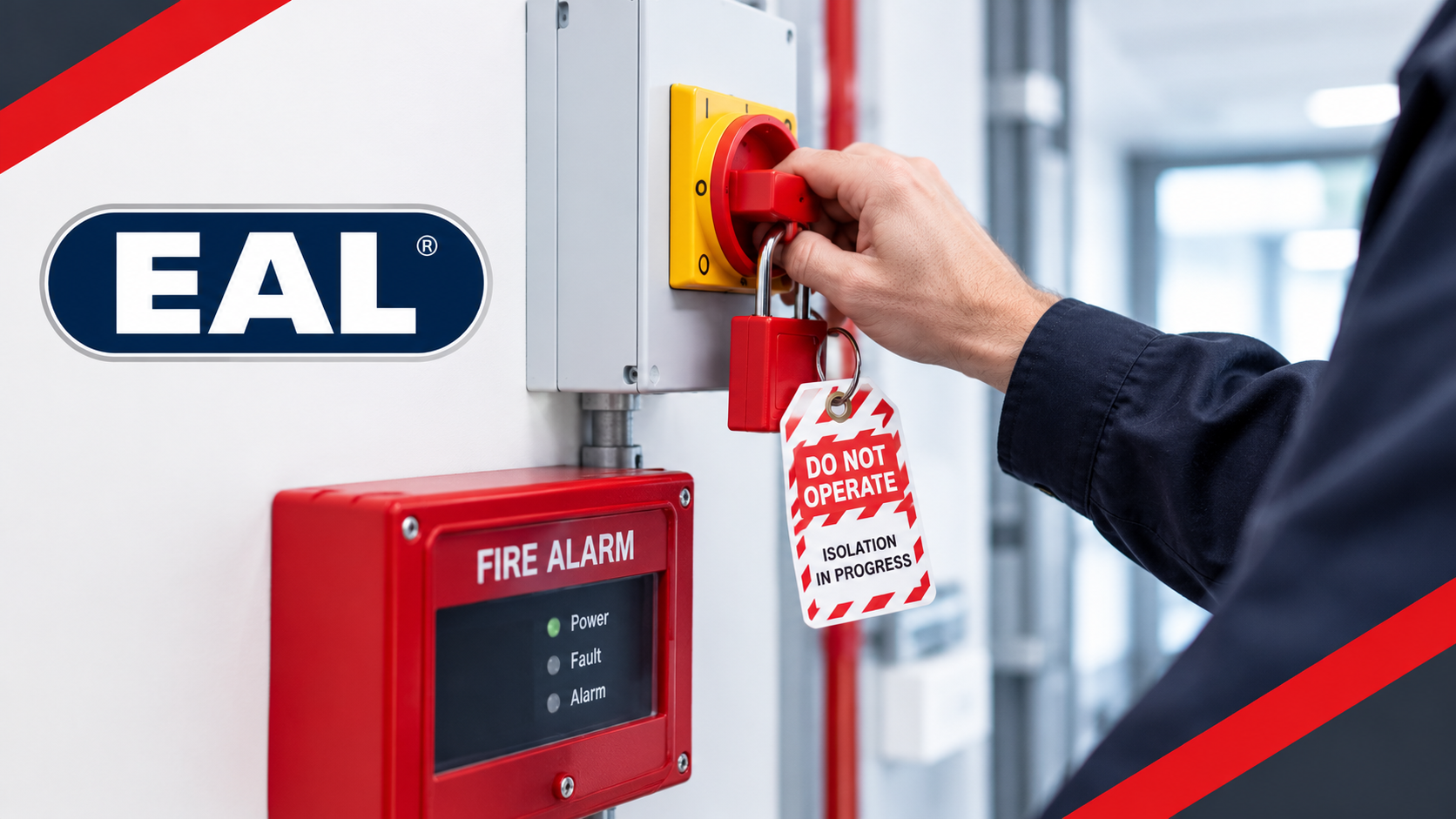
EAL-Endorsed Safe Isolation for Fire Alarm Installers

Build a reliable safe-isolation routine for fire detection and alarm installation, maintenance and fault-finding work through an EAL-endorsed course.

Safe Isolation

This course is ideal for

  • Fire alarm installers who need to refresh or evidence their isolation practice
  • Fire alarm installation learners and improvers
  • Fire detection service and maintenance engineers
  • Fire and security systems technicians
  • Fire alarm supervisors, contracts managers and team leaders
  • Electricians moving into fire detection installation, commissioning or maintenance

Course Overview

This one-day Safe Isolation Course is written for fire alarm installers, service engineers and technicians who may need to isolate low-voltage supplies before installing, altering, maintaining or investigating fire detection and alarm systems.

Planned for EAL endorsement, the programme combines essential legal knowledge with supervised practical work. Learners cover the Electricity at Work Regulations 1989, Regulation 14, HSE GS38 principles, appropriate test equipment and a controlled isolation process.

Tutor-led explanation, demonstrations, electrical incident reviews and fire-sector scenarios help learners turn the procedure into a consistent working habit. A written test and practical assessments provide separate evidence of knowledge and performance.

Show More

Schedule & Duration:

  • How the Day Is Structured
  • Fire alarm work activities, electrical hazards and learning outcomes
  • Legal duties, Regulation 14 and competence
  • Isolation sequence, GS38 principles and equipment selection
  • Tutor demonstration followed by structured practical preparation
  • Incident analysis and fire alarm installation scenarios
  • Written test, single-phase and three-phase practical assessments, and feedback

The timetable may be adjusted to suit group size, learner experience and practical assessment arrangements. Contact CBWA for confirmed start and finish times.

Equipment & Facilities

Please see the list of training equipment and centre facilities that we offer.

You will have access to:

  • Approved single-phase and three-phase safe-isolation training rigs
  • Suitable GS38-compliant two-pole voltage indicators
  • Proving units or controlled known live sources
  • Lock-off devices, padlocks, hasps and warning notices
  • Examples used to recognise unsuitable, damaged or non-compliant test equipment
  • Learner workbooks, case studies and assessment materials
  • Industry-experienced tutors
  • Free on-site parking, kitchen facilities and refreshments

We are located at: Unit 1, Crondal Road Bayton Road Industrial Estate Exhall, Coventry CV7 9NH
How the Course Supports Fire Alarm Work

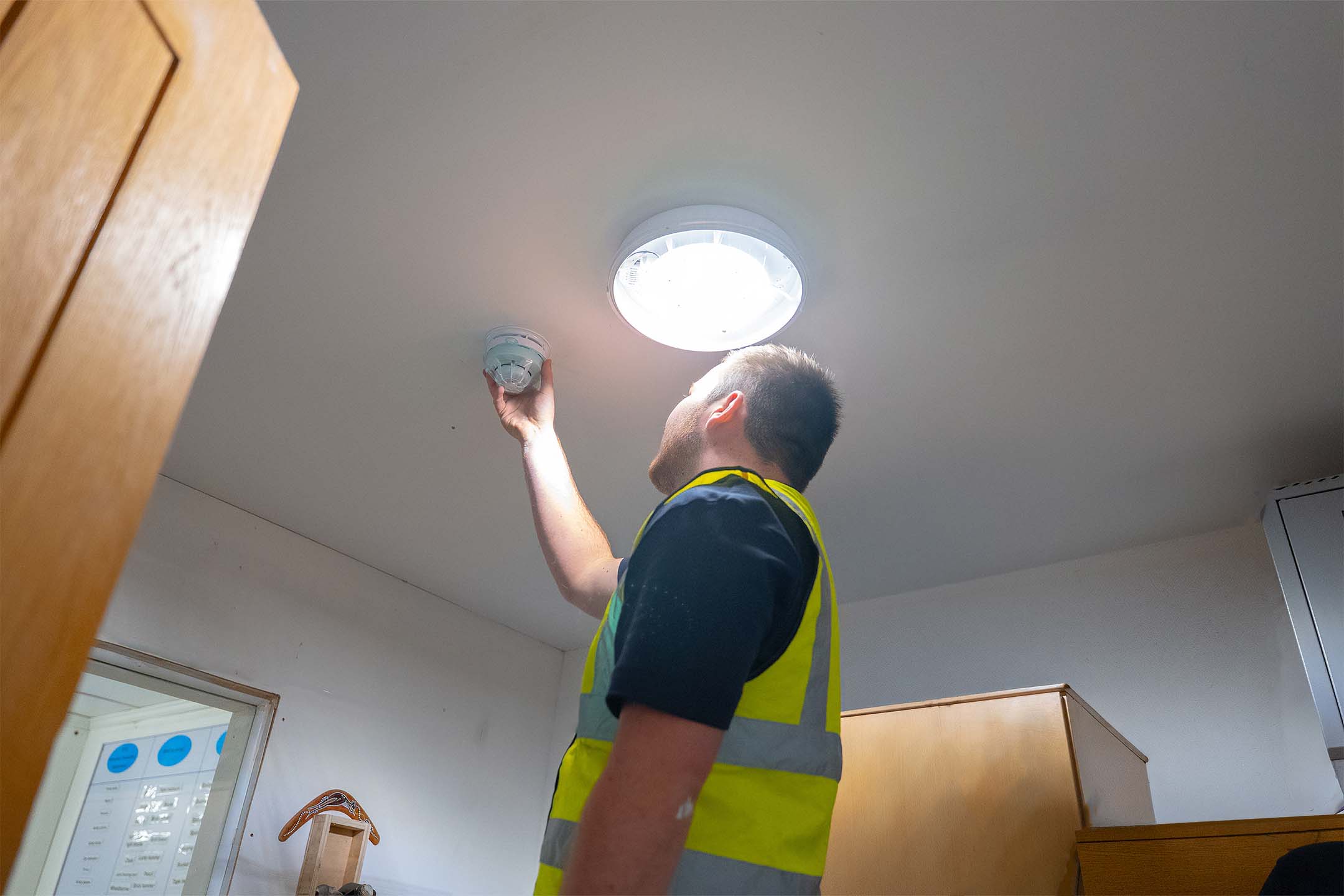
Fire alarm work can involve local fused connection units, distribution-board circuits, control equipment and interfaces with other building systems. Learners follow a methodical process to identify the correct supply, isolate and secure it, select appropriate test equipment, prove dead and verify that the tester still operates correctly.

Safe working practice is linked directly to the legal limits on work on or near live conductors. The session also addresses communication with responsible persons, inaccurate labels, alternative sources, backfeed, changes to the work scope and controlled restoration of the supply.

Show More

How Learners Are Assessed

Assessment consists of an individual knowledge test and supervised practical tasks. All practical activity takes place on approved centre equipment under controlled conditions; an unsafe action requires the assessor to stop the task.

Fire Installer Knowledge Test
The 10-question multiple-choice paper checks understanding of Regulation 14, circuit identification, secure lock-off, proving dead and test-equipment selection. A score of 7 out of 10 is the suggested pass standard, with support and further questioning used where necessary.

Practical Safe-Isolation Assessment
Using approved training rigs, each learner completes safe-isolation tasks for both single-phase and three-phase systems. The assessor observes equipment choice, circuit identification, secure isolation, confirmation of dead and safe conduct throughout.
All practical criteria are mandatory. Oral questions may be used to confirm why the tester is checked, why the isolation is secured, how the correct supply is established and what extra hazards arise on three-phase systems.

Show More

Recommended Entry Profile

Applicants should understand basic electrical principles and common circuit arrangements. Experience of fire alarm installation, servicing, electrical work or related training is recommended, and CBWA may confirm suitability before enrolment.

  • Basic knowledge of circuits, protective devices and fire alarm power supplies
  • Literacy and numeracy suitable for the written assessment
  • Ability to follow safety instructions and work methodically
  • Relevant electrical or fire detection training and practical experience

Show More

Fire Alarm Installer Skills Developed

  • Explain why switching off is not the same as safe isolation
  • Identify when fire alarm work must not proceed live
  • Trace the intended fire alarm supply and consider alternative energisation
  • Select and inspect suitable test equipment
  • Secure an isolation using appropriate lock-off equipment
  • Apply a correct prove-test-prove process
  • Demonstrate safe isolation on single-phase and three-phase training equipment
  • Recognise unsafe shortcuts and common equipment errors
  • Coordinate isolation and reinstatement with responsible persons and affected users

Show More

What Do We Offer?

EAL endorsement for sector-focused training
A fire-alarm-installer-focused programme with written and practical assessment, prepared for formal EAL endorsement.

Practical, safety-led delivery
Learners work with appropriate test and lock-off equipment in a controlled training environment.

Single-phase and three-phase assessment
Practical competence is assessed across both common system types.

Fire alarm installation scenarios
Fire detection and electrical incident scenarios help learners make safer decisions under realistic site pressures.

Industry-experienced tutors

Training and assessment are delivered by personnel with relevant electrical experience.

Show More

Certification

Successful learners will receive an EAL-endorsed course certificate once the course endorsement and certification arrangements have been formally approved and implemented.
The certificate records successful completion of the course assessments. It does not replace employer authorisation, task-specific training, supervision, experience or a workplace assessment of competence.

Show More

Progression for Fire Alarm Installers

  • Fire alarm installation, commissioning and maintenance training
  • Inspection and testing qualifications
  • Fire detection fault diagnosis and planned maintenance responsibilities
  • Fire and security apprenticeship or occupational competence development
  • Employer-specific authorisation and workplace assessment
  • Supervisory, contracts-management and site-safety responsibilities

Show More
£180.00

EAL-Endorsed Safe Isolation for Fire Alarm Installers

  • Duration1 Day
  • Skill LevelExperienced

EAL-Endorsed Safe Isolation for Fire Alarm Installers
£180.00